 Duckweed Atlas
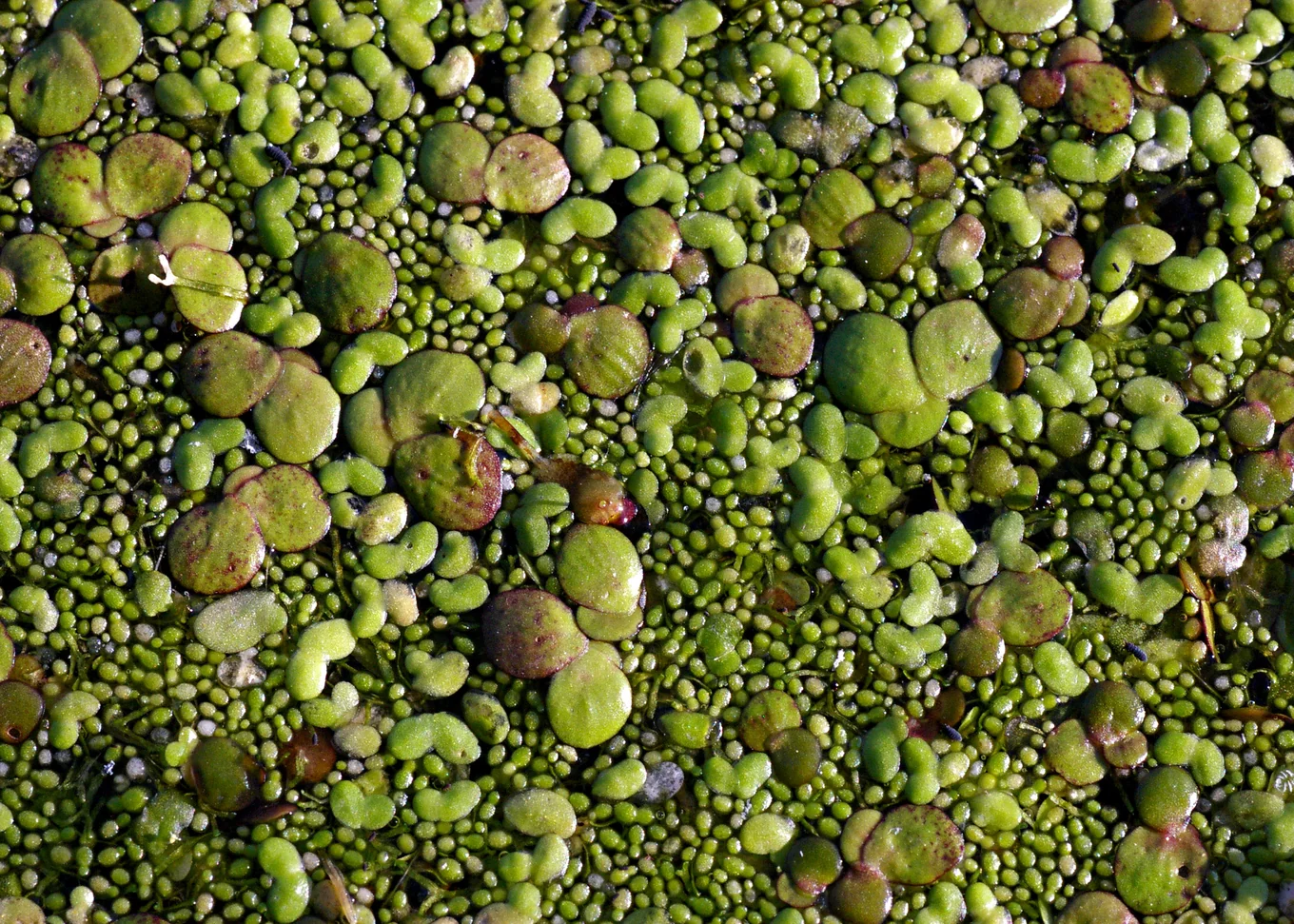

In ponds
Duckweed and watermeal can form mats on calm surfaces. Heavy growth can affect light and pond management. A large treatment-related die-off can lower dissolved oxygen as plants decay, with potential fish loss. An extension office or pond professional can help identify the plant and choose a locally appropriate response. Keep culture water out of waterways and never seed a public or shared pond. Penn State Extension · U.S. Fish & Wildlife Service
In treatment systems
Duckweed can take up dissolved nutrients. In pilot and bench studies, harvesting biomass removed a portion of nutrients from the system. Concentration changes alone may reflect changes in water volume and other pathways. Assess mass balance using water flow, inflow and outflow concentrations and harvested material. Bioresource Technology 2014 · Iatrou et al. 2019 · Devlamynck et al. 2021
Biomass from remediation can contain materials removed from the water. Keep it outside the human food stream. Any feed, fertilizer, bioenergy or disposal route calls for contaminant testing and a pathway-specific regulatory and environmental review. Iatrou et al. 2019 · Devlamynck et al. 2025 · Appenroth et al. 2018 · Science of the Total Environment 2023
Environmental claims worth checking
Compare the same output unit and specify whether drying, lighting, pumping, heat, nutrient inputs, greenhouse gases and disposal are included. Published manure-system experiments and life-cycle studies can help define the questions. Their results depend on assumptions and system boundaries. Avoid treating uptake by a growing crop as proof of permanent carbon removal. Science of the Total Environment 2023 · Scientific Reports 2026 · Sustainable Food Technology 2025
Keep cultures contained
Use dedicated screens and capture overflows. Clean and dry tools before moving between water bodies. Use local agency guidance for live plants, aquatic waste and contaminated biomass disposal. U.S. Fish & Wildlife Service · USDA APHIS · Penn State Extension
Sources for this page (11)
- Duckweed and watermeal
- Clean, Drain, Dry
- Potential of duckweed in converting wastewater nutrients to biomass
- Biomass, protein and starch in laboratory duckweed wastewater treatment systems
- Agronomic and environmental performance of Lemna minor on agricultural wastewater
- Pilot duckweed cultivation for pig manure treatment and feed production
- Nutritional value of the duckweed species of the genus Wolffia as human food
- Life cycle assessment of wetlands and duckweed ponds in liquid manure handling
- Greenhouse gas and ammonia emissions in diluted manure duckweed systems
- Duckweed: exploring its farm-to-fork potential and biorefineries
- Organism and soil imports: federal noxious weeds
Sources checked November 21, 2026